|
 |



Old Paris - New Tricks
Faced with increasing competition from trendsetting tourist hubs like Tokyo and New York, a high-design hotel revolution is breathing new life into the capital of 'Old Europe'. Laura Henderson reports.
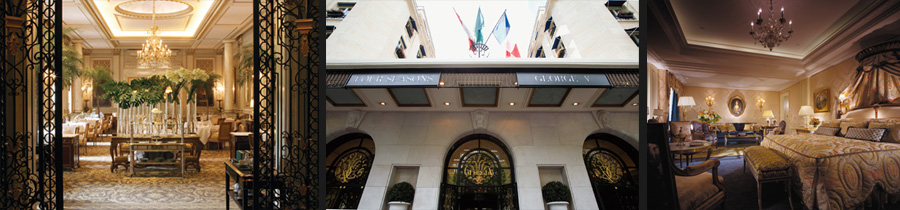
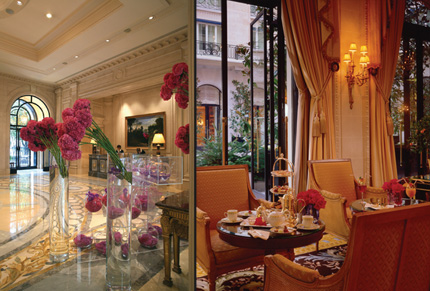
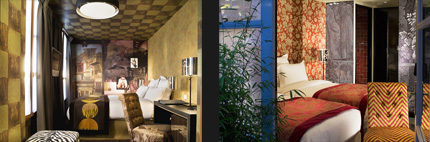
If blisteringly hip is your idea of hotel heaven, then the Bellechasse off the tree-lined Avenue Saint Germain des Pres should satisfy your haute-couture cravings. An orgy of colours and textures, brocade walls, billowing voile drapes and silver tipped chandeliers tick the decadent boxes; every touch-point intriguingly over-the-top, much like the hotel’s iconic designer Christian Lacroix. Three years on from garnering a panier of plaudits for his offbeat overhaul of the Hotel du Petit Moulin in the Haut Marais, the fashion guru has worked his magic once again, this time on a genteel 1920s maison de maitre. Bellechasse guests are promised “a pictorial flight of fancy from arrival to departure”, one judging by the gallery of abstract objets d’art, astrological frescoes and Pompeii-style murals that promises to feed the soul as well as the senses. No fewer than seven key note themes from neoclassicism to the Bohemian spirit are played out in the décor, while each of the 34 intimate rooms is itself a showcase in outlandish Lacroix styling from glow in the dark desks and fibre-optic ceiling stars to metallic-clad walk-in showers and funky sliding doors. Defenders of Paris’s meticulously preserved historic fabric may well rail against such 21st century flamboyance. But with this old-school niche sown up by Right Bank grand dames like the Bristol, Le Meurice and the Plaza Athenee – boutique lodgings represent an exciting, new chapter for the city’s hoteliers, an opportunity to woo a younger beau monde generation and keep the capital’s tourist tills ringing. It’s a trend, confirms luxury hotel consultant Isabelle Coornaert that is very much set to continue. One of the key note speakers at last autumn’s ‘Future Vision Paris’ summit chaired by President Sarkozy, Coornaert highlighted the need to emulate forward thinking tourist Meccas such as London, Tokyo and New York, and adapt to the futuristic design-led climate flourishing elsewhere. “Travel and fashion are inextricably linked – and not just because designers want to dabble in the business. There’s a much stronger pay-off at stake. Fashion houses for one, are always looking for new ways to position their lifestyle offerings and hotels are the ideal vehicle for doing this, allowing clients to indulge in a designer fantasy by moving into rooms that are ‘live-in’ ads for that very way of life. By the same token, the hotel industry has to maintain momentum through tourist volumes. For individuals designing hotels, that means coming up with even more inventive ways to engage guests and secure their loyalty. Given the ‘old school’ fabric of Paris, introducing a contemporary hotel imprint into the classic mix clearly offers huge potential – best of all, visitors start to look on their ‘museum city’ surrounds with fresh eyes.” |
Few would disagree that the hotel’s historic ambience melds well with the necessary modern sensibility, but as PR Director Caroline Mennetrier is quick to point, staying competitive has a lot to do with retaining a hotel’s cultural context. “These days, hoteliers have so many more value-added options to build on. Technology is now a driving theme in hospitality design, with ‘smart home’ additions like iPod docks, flat-screen televisions and high-speed Internet an expected minimum standard. But these remain secondary to the luxury touch points and personalised service, which, help to create a relaxing, cocooned environment. Creating and maintain that homely ambience in a big city context, is a tough challenge. The real litmus test for success however, is repeat business – securing a loyal client base that sees guests, particularly families, come back time and again. Famous hoteliers often talk about “getting the balance right”, creating an experience so strong that your guests go home with great memories. Yes, it’s a feat that’s hard to achieve, but when the chemistry of location, design and service comes together, it’s the best feeling in the world.”
|
|